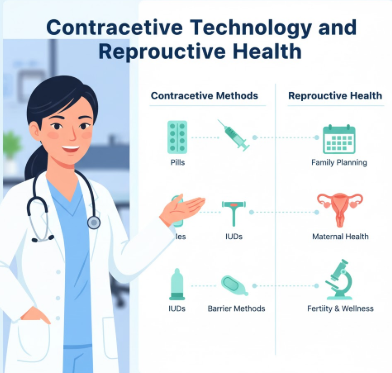
Contraceptive Technology and Reproductive Health
Introduction
Contraceptive technology plays a vital role in improving reproductive health by allowing individuals and couples to plan and space pregnancies safely. With advances in medical science, various contraceptive methods have become available — offering choices that are effective, reversible, and suited to different lifestyles and health conditions.
What is Contraceptive Technology?
Contraceptive technology refers to the scientific development and application of methods or devices designed to prevent pregnancy. These methods work by preventing ovulation, fertilization, or implantation. Modern contraceptive technologies have evolved to include both hormonal and non-hormonal options, providing flexibility and safety for users.
Types of Contraceptive Methods
1. Hormonal Methods
These contain synthetic forms of estrogen and/or progesterone that regulate the menstrual cycle and prevent ovulation.
Examples include:
- Combined Oral Contraceptive Pills (COCs)
- Progestin-only Pills (POPs)
- Contraceptive Patches
- Vaginal Rings
- Injectable Contraceptives
- Implants (like Nexplanon)
How they work:
They suppress ovulation, thicken cervical mucus to block sperm entry, and thin the uterine lining to prevent implantation.
2. Barrier Methods
Barrier methods physically block sperm from reaching the egg.
Common types:
- Male condoms
- Female condoms
- Diaphragms
- Cervical caps
- Spermicidal gels or foams
Advantages:
No hormones, prevent sexually transmitted infections (STIs), and can be used on demand.
3. Intrauterine Devices (IUDs)
IUDs are small, T-shaped devices inserted into the uterus to prevent pregnancy.
- Hormonal IUDs (e.g., Mirena, Kyleena) release levonorgestrel.
- Copper IUDs (e.g., ParaGard) release copper ions toxic to sperm.
Duration: Effective for 3–10 years depending on type.
4. Permanent Methods
For individuals who do not wish to have children in the future:
- Female sterilization (tubal ligation)
- Male sterilization (vasectomy)
These are surgical procedures and are considered irreversible.
5. Emergency Contraception
Used after unprotected sex or contraceptive failure.
Types:
- Levonorgestrel pills (Plan B One-Step)
- Ulipristal acetate (Ella)
- Copper IUD (if inserted within 5 days)
Benefits of Contraceptive Technology
- Prevention of unintended pregnancies
- Reduction in maternal and infant mortality
- Empowerment of women through reproductive choice
- Improved family planning and socioeconomic stability
- Management of menstrual disorders and hormonal imbalances
Reproductive Health and Contraception
Reproductive health encompasses the physical, mental, and social well-being in all matters related to the reproductive system. Contraceptive access is a cornerstone of reproductive health because it allows individuals to make informed decisions about their fertility, promotes safe sexual practices, and supports gender equality.
World Health Organization (WHO) emphasizes that access to safe, affordable, and effective contraception is essential for protecting reproductive rights and public health.
Challenges in Contraceptive Use
- Limited awareness in rural and low-income areas
- Cultural and religious barriers
- Fear of side effects
- Limited availability of skilled healthcare providers
- Gender inequality affecting women’s autonomy in reproductive decisions
Addressing these challenges requires comprehensive sex education, counseling, and improved healthcare infrastructure.
Future of Contraceptive Technology
Research continues into next-generation contraceptives such as:
- Male hormonal pills and gels
- Non-hormonal contraceptive vaccines
- Biodegradable implants
- Digital fertility tracking and wearable reproductive tech
These innovations aim to improve convenience, reduce side effects, and increase accessibility worldwide.
Conclusion
Contraceptive technology has transformed reproductive health globally by providing safe, effective, and diverse options for preventing pregnancy. Empowering individuals with knowledge and access to contraception enhances not only health outcomes but also social and economic development. Ensuring universal access to modern contraceptives remains a key goal for global reproductive health initiatives.
Sources / Scientific References
Hubacher D, Trussell J. A definition of modern contraceptive methods. Contraception. 2015;92(5):420–421.
World Health Organization (WHO). Contraception. Available at: https://www.who.int/news-room/fact-sheets/detail/family-planning-contraception
Centers for Disease Control and Prevention (CDC). Contraception and Reproductive Health. https://www.cdc.gov/reproductivehealth/contraception
United Nations Population Fund (UNFPA). Family Planning and Reproductive Health. https://www.unfpa.org/family-planning
Trussell J. Contraceptive failure in the United States. Contraception. 2011;83(5):397–404.